
Bench Tips and Trivia
Good Bits For the Savvy Watchmaker
By
Frank Poye
The organised person always has a place for everything and has everything in its place. Are You that organised ? (I didn't think so....Me either ! ) A bench top that is not covered with work is a sad sight to Me. Spread Out !! Make a bigger bench top . Only You can judge what will be the best size for You but concider Your needs first. Lay it all out so You can have everything You need to use right in front of You .
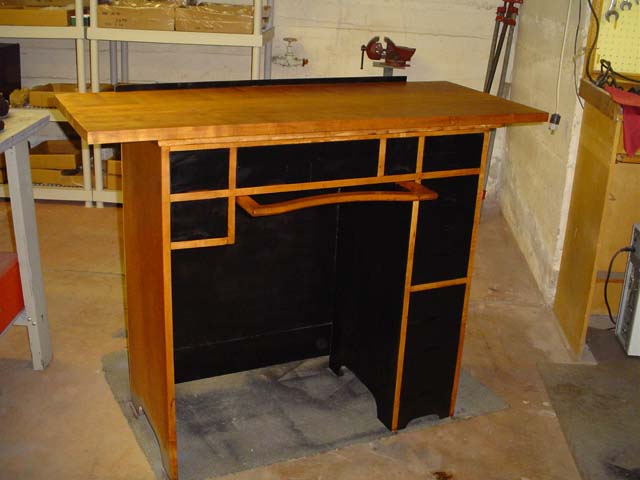
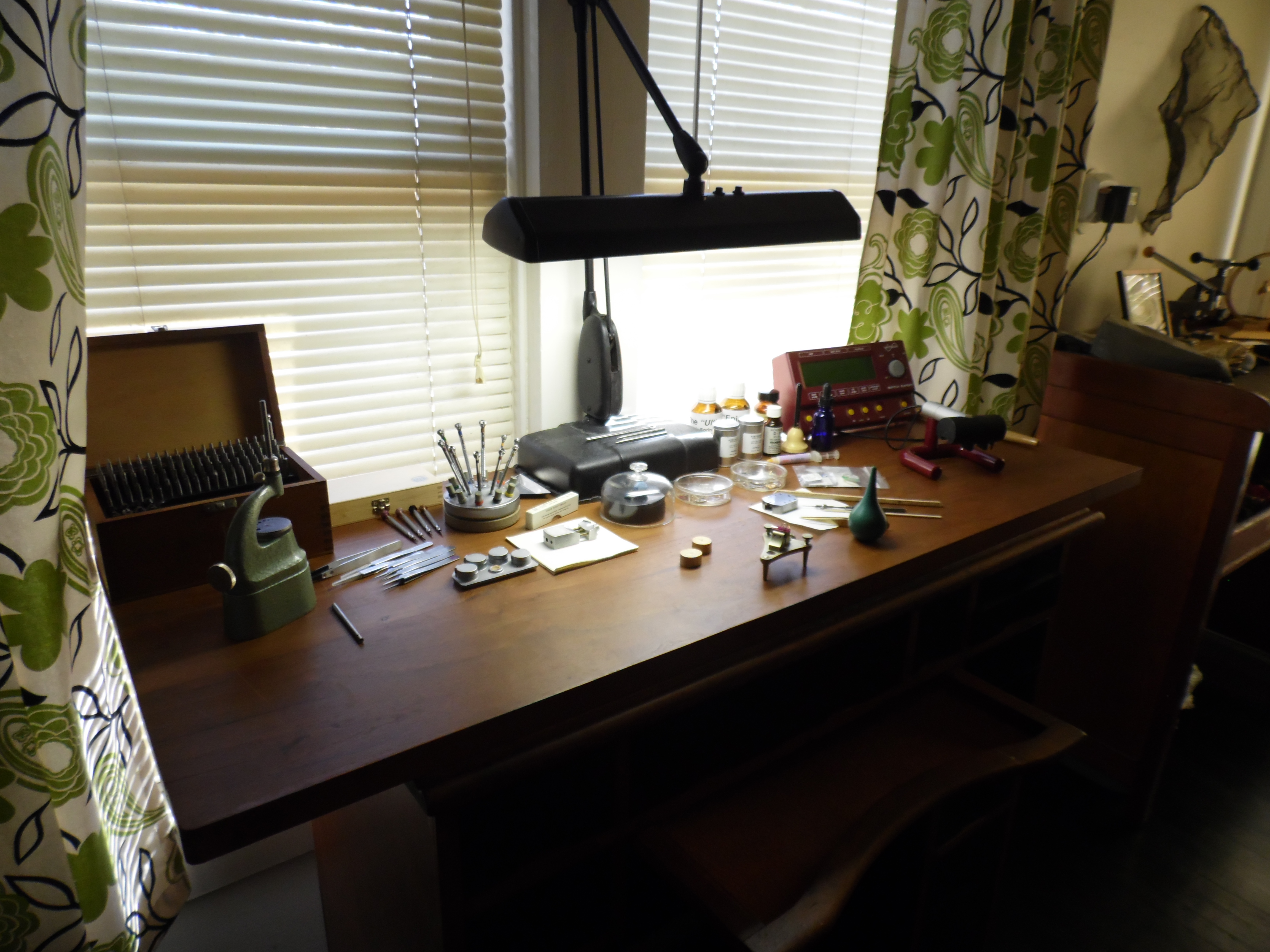 Plan to have extra room for
Your timing machine ,staking set, ect. ect. You get the idea. An
extra foot on both sides is a real plus in My book. With a little
extra effort (and a friend with a wood shop) You can have a top
made up out of fine wood for very little extra scratch and boy
does that make You feel super when You sit down to work. If You
like green then Vinyl drafting board covering works excellent. It
comes in just about any size You could want. Its also waterproof
and easy to clean. So get out of that 144 sq.in. prison and taste
a little freedom.
Plan to have extra room for
Your timing machine ,staking set, ect. ect. You get the idea. An
extra foot on both sides is a real plus in My book. With a little
extra effort (and a friend with a wood shop) You can have a top
made up out of fine wood for very little extra scratch and boy
does that make You feel super when You sit down to work. If You
like green then Vinyl drafting board covering works excellent. It
comes in just about any size You could want. Its also waterproof
and easy to clean. So get out of that 144 sq.in. prison and taste
a little freedom.
~
Next time your sauntering past the cosmetics counter stop by and pick up a retractable make up brush. They work fantastic for all manner of things at the bench. Wearing glitter on Your face is Ok if Your one of the Spice Girls. If Your not and You like to use a lathe ,have one handy along with a mirror to brush away the small flecks of metal that always manage to get all over Your face. Your customer might not understand that it really isn't glitter .
~
Don't get mad ... Get Glad Actually, I perfer Reynolds plastic wrap. I like to wrap a watch in it when I install a crystal with a press. The plastic wrap holds the crystal in place very well and is much thinner then other plastic bags and such usually used to cushion the case and crystal from damage while installing the crystal. It is sort of like instant shrink wrap! I also use it to wrap items like watches for travel that might tend to knock around and get dented. Small tools for that bench course arrive all together when you wrap them up first before you go. And... We've all been to the watch show and found some special little something that just didn't have a container. Wrap it in plastic wrap and it will make it home with out damage. I think you get the idea. Give it a try !
~
If your looking for a cool platform for creating overcoil hairsprings then try a hockey puck. The rubber is well suited for the job and allows a flat sturdy base that is firm yet still soft enough to press your tweezers into while forming the rise and leveling off bends. They cost only 99 cents. Thats a inexpensive way to keep from "Pucking up your hairspring"
~
Now this isn't really a bench tip but give it a try anyway. I have found that 'RODICO' works really well to use for ear plugs. It molds easy, feels comfortable and keeps out the loud sounds at NASCAR Races as good as anything I have ever used. ( It cleans Your ears to boot !! hahaha)
~
Pick up a speedy lubricator for putting silicon lube on gaskets. This is a little round plastic container with two sponges inside saturated with silicon lube. Just put the gasket inside close the lid, then open the container and revove the gasket with tweezers. Its simple , fast and doesn't make a mess. You can also make one Yourself using a materials tin and a couple of sponges.
~
A number of wood working supply cataloges offer 're-sharpened' carbide drill bits in lots of 50 for less then $10.00 .Now whats nice about these is that for many things they work just fine and if they break then so what. When they break use the small shank to fashion tiny gravers with on a diamond hone.
~
Do You just hate Your lathe belt ? Then get some 'polycord belting' (I believe they call it Habaset belting in Germany) Its green , comes in a number of diameters and is sold by the foot. Using a hot razor blade melt the ends to be spliced . Pull the ends off together and join them at the same time. The stuff is super , very flexable and it does not set up and get hard. It also grips the pullys well so the belt tension can remain quite loose . This saves wear and tear on the motor and lathe bushings. In addition the low belt tension seems to transfer less vibration.
~
Use Your poiseing tool for checking pivots on wheels besides the balance. Just roll the wheel in question across the jaws of the poising tool and watch for any deflection in the pivots. You can even check out a questionable pallet arbor . Just suspend the pallet close to the shoulder of the pivots. Start it rocking back and forth and look for any wobble or deflectionof the pivot.
~
~
The other day I picked up "Mr. Clean Magic Eraser" at the store while shopping for cleaning items. I had seen it on the TV and hey the things work great! Without a doubt you have to pick some up next time your at the store. Bench tops, counters, walls you name it.... they come clean with these little white sponges. You just have to have them.
~
When you work on small parts such as a pallet fork they have the the nasty habit of trying to fly away from you. I like to avoid this by using a small piece of scotch tape to hold the part in place on my bench anvil. The tape cushions the part and help aviod scratches and keeps it from going airborne at the same time.
Poising with a Balance Burger
I like to use every method available to keep My fingers off of watch parts. People say,"yea...but I'm gonna clean it when I'm done ". I say so what ! keep your dirty paws off of it to begin with. This is especially important during poising of a balance wheel. Once I start a poising operation I never touch the balance. Some people find it difficult to hold the balance secure while removing weight from the wheel or adjusting a screw without using the fingers. To You folks working that way I offer this simple solution I bet You'll use from now on.

I call it the ~ Balance Burger~ Place the wheel in between two pieces of clean pith wood leaving the part of the wheel to be worked on exposed. " Viola " , safe ,secure and oh so clean ! The wheel is now ready to be adjust by which ever manner You like. Filing , balance screw cutters , drills , adding or removing timing washers ...take Your pick. This works real well to hold just about any part that needs to be formed, shaped or fashioned.
~
Did You know that at some of the Swiss Factories (Audimars Piguet for instance) They use isopropyl alcohol as a hairspring and balance cleaner ."How is this", You say, "Alcohol disolves shelac!! This can't be". "Relax", they said. "You see... isopropyl alcohol does not harm the shelac holding in the roller jewel like ethel or denatured alcohol !!" " Just be sure to get 99% isopropyl because it does not have the water in it ."( most rubbing alcohol is isopropol too but contains about 30% water). I watched the process being performed so I know it works (at least at Audimars Piguet) There are many folks who will say this is not true and I am still some what sceptical Myself. Just to be on the safe side, try it just on the hairspring.
I have visited a number of fine watch manufactures and repair centers and have seen some fantastic equipment for testing the water resistance of a watch case. I have seen electronic controled pressure chambers that will test a case to the equivalent of 5000 feet under water and throw in heat/cold/vacuum and scan it with a lazer beam to boot. We have some rocket science technology available to Us (for a price) to use in Our shops as well . Even with all this fancy equipment its great to find a simple method that does the job just as well ( or maybe even better) The most popular method to test a water tight case has been to use an apperatus such as the Bergeon 5000 waterproof testers. These are by all means wonderfull and do a great job of "presure testing" a watch case. The bad part about only testing a watch in this manner is that a watch case may still leak even if it passes the high presure test. Presure on the watch case can actually help seal up small openings that may allow water in. A person taking a shower, swimming or just dancing in the rain may complain that the watch They wear fogs up. While visiting Cartier in Switzerland They showed Me this very basic test that They do to check watch cases for leaks. The beauty part is it is so simple and cheep to do!
After You perform all the tests You usually make , do this little test too.
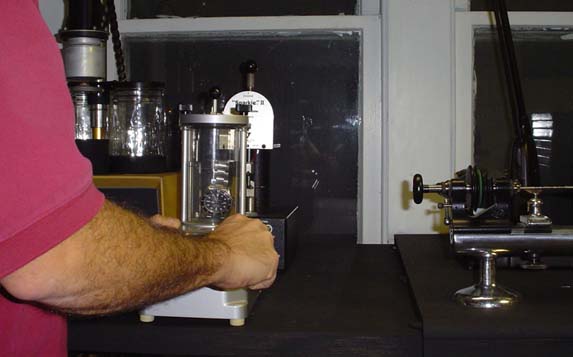 First submerge Your watch
case in water in Your presure tester. You can just do the case
alone if You like. Now add a little little little bit of presure.
the idea here is to simulate a shower , a swim or that dance in
the rain. leave it there for awhile. If water is going to get in
after five minutes it should be inside the case. You do not need
to be able to see it for it to be there. Release the presure and
remove the watch case and heat it to about 130-140 degrees F. At
Cartier They place the watch on a cookie proofing sheet covered
with ceramic tiles and put it in a special little oven. You could
do the same or just set the case some where it will get about
that hot like on top of Your steamer. Let the watch get good and
warm. Any water in the case will get warm also
First submerge Your watch
case in water in Your presure tester. You can just do the case
alone if You like. Now add a little little little bit of presure.
the idea here is to simulate a shower , a swim or that dance in
the rain. leave it there for awhile. If water is going to get in
after five minutes it should be inside the case. You do not need
to be able to see it for it to be there. Release the presure and
remove the watch case and heat it to about 130-140 degrees F. At
Cartier They place the watch on a cookie proofing sheet covered
with ceramic tiles and put it in a special little oven. You could
do the same or just set the case some where it will get about
that hot like on top of Your steamer. Let the watch get good and
warm. Any water in the case will get warm also
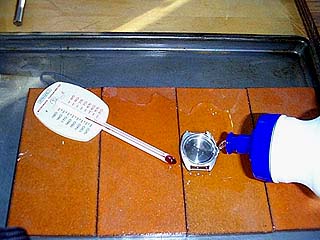 Now using a sports water
bottle filled with ice water squirt water on the watch crystal.
The sudden change in tempreture will cause any water inside the
case to condense and fog up on the inside of the watch crystal.
If there is fog...You have a leak ~ If there is no fog ... there
is no water in the case .
Now using a sports water
bottle filled with ice water squirt water on the watch crystal.
The sudden change in tempreture will cause any water inside the
case to condense and fog up on the inside of the watch crystal.
If there is fog...You have a leak ~ If there is no fog ... there
is no water in the case .
~
By first using a file and sand paper to smooth out the big scratches in a plastic crystal the polishing job will turn out much better looking and will also remove less plastic in the long run. Most plastic polishing compounds really do not polish at all but just remove plastic. In fact, they are more of a cutting compound and can be as abrasive as Tripole. Crystal Clear is a popular brand. When using these compounds only charge one side of the buff and leave the other side with no compound. Buff the crystal as usual on the side that has been loaded up with compound. When it looks as good as You can get it buff it fast and light on the side of the buff with no compound. The heat of the buff will 'burnish' the plastic and the resulting polish job will be clear, lusterous and without any haze. Remember this especially when the watch has a black dial !
~
Is Your lap tray a 'trampoline' when Your parts fall in it ? Do they bounce to places unknown ? Then try this. Remove that stiff Musslin cloth and replace it with Terry Cloth (like a bath towel) . Size the new cloth so it hangs loose, when You install it, not tight. When parts land in it now they stay put where they hit. A simple tap of the hand underneath the cloth will let You locate the little offender and retrieve it in a flash.
~
Have You had a motion problem in a watch movement that You just could not seem to solve. You know the kind... everything looks real good but the motion drops off in one position. Rotate the balance jewels. Give them about a half a turn then check to see if the motion error moved also. If it has then Your problem is solved... replace one or both of the jewels.
~
Teach the people that take in work for You to use words like Form, Shape, Fashion, Planish, Burnish, Fuse, Intervention. These words make more money then ~ twist-bend-scrape-hammer-weld and fix ~.
~
Practice working with Your non dominate hand and eye. You might find that , over time, Your working speed will pick up. There will also be less strain on your eyes. This little pre-need arrangement is helpfull should You injure Your hand doing some fool thing like picking up a rock with a rattle snake under it.( happened to Me once)
~
Do not keep small steel tools or parts stored in pith wood for long periods of time. Pith absorbs moisture from the air and this will rust Your parts
~
When refinishing a watch case start by doing the touch ups first. In other words , start with the hard to get to places. Use small tools, a fiberglass brush or selected grades of sand paper to create the desired texture in those tight spots first. Finish off by working the large areas. The result is a much more professional finish and it is also less work.
~
Artist charcoal is wonderful to use as a polishing agent for small steel parts. Try just rolling the teeth of an escape wheel across the charcoal a few times. The microscopic polishing effect is like magic !
~
Now this one is going to seem like some sort of VooDoo thing but try it....I promise You'll like it !! Use a sheet of plastic overhead transparency film as a final lap for steel gravers. I know Your thinking I'm just as crazy as crackers but just try it. Don't ask Me how it does so well but the result is a black shine.
~
A thin leather buff stick layed over the top of the movement will keep trouble from happening should Your screw driver slip. Just place it next to the screw driver blade and work away with confidence. This little tip will prevent a lot of damaged coils !
~
Plastic bags are great to put watches in while removing glass crystals with a crystal press. The clear plastic allows You to see what Your doing and avoids scratches to the case at the same time. When removing a broken glass crystal it will keeps shards of glass from going all over the place.
~
Putting new luminous compound on watch hands used to be a messy job. Often, the glow in the dark paint would bleed over on to the top of the hands and it had to be removed. (what a pain in the *&#@#$)
I do it different now. I let capillary attraction do the work for Me. Try this...With the hand right side up, put the hole of the hand on some pith wood and leave the area requiring new luminous compound hanging over the edge. Secure it with a pin if needed. Now apply the glow in the dark paint from the underneath !
The paint will be drawn into the hollow area and wick itself right to the top surface of the hand , but no further. Let it dry. The job will be factory perfect and require no clean up.
If You ever need to match a color with this compound try glow in the dark Tee Shirt Paint. It comes in all sorts of colors and can be mixed to create a special color. You can get it at crafts stores.
To
Be Continued ............
Call me if you like for my latest bench tip!